29 January 1905 – 4 July 1970
Barnett Newman
Work
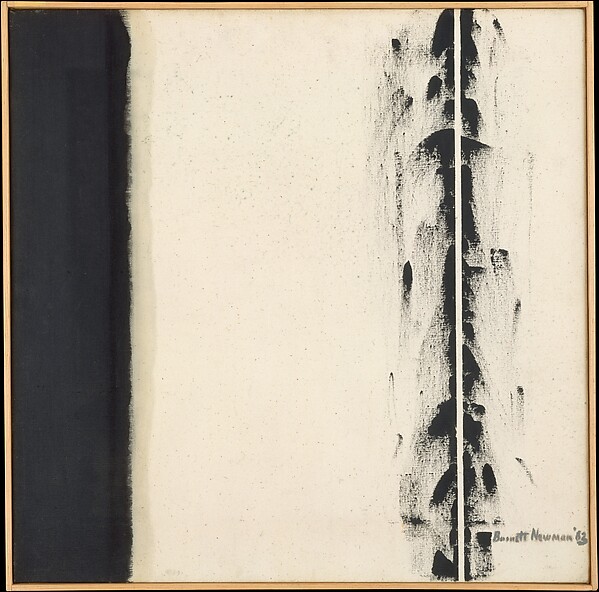
Barnett Newman's work includes a range of abstract art created as a painter, sculptor, printmaker, and illustrator. His pieces span several decades, such as "The Song of Orpheus" from 1944 and "The Beginning" from 1946. He produced multiple untitled works, including an "Untitled" piece from 1945, another "Untitled" from 1960, and an "Untitled" from 1961, as well as "Untitled 2, 1949" and "Untitled 3." Other notable works include "Concord" from 1949, "The Station" from 1963, and "Canto II, from 18 Cantos," also from 1963. Later works include "Shimmer Bright" and "Lace Curtain for Mayor Daley," both from 1968, and "Untitled Etching #1" from 1969, concluding with "Untitled 1, 1970."
Biography
Barnett Newman, an American painter, sculptor, printmaker, and illustrator, was born on January 29, 1905, in New York City. He was a member of the Polish American group. Newman's education included studies at DeWitt Clinton High School, the City College of New York, the City University of New York, and the Art Students League of New York. He worked in New York City throughout his career. Newman was a significant figure in abstract expressionism and Color Field painting, creating abstract art. His notable works include "Voice of Fire" from 1967 and "Shining Forth (to George)" from 1961. Other pieces include "The Song of Orpheus" (1944), "The Beginning" (1946), "Concord" (1949), "The Station" (1963), and "Canto II, from 18 Cantos" (1963). He also created "Shimmer Bright" (1968), "Lace Curtain for Mayor Daley" (1968), and "Untitled Etching #1" (1969), along with several untitled works from 1945, 1960, 1961, and 1970, as well as "Untitled 2, 1949" and "Untitled 3." Barnett Newman died in New York City on July 4, 1970, from natural causes due to a myocardial infarction.
Works
Notable works
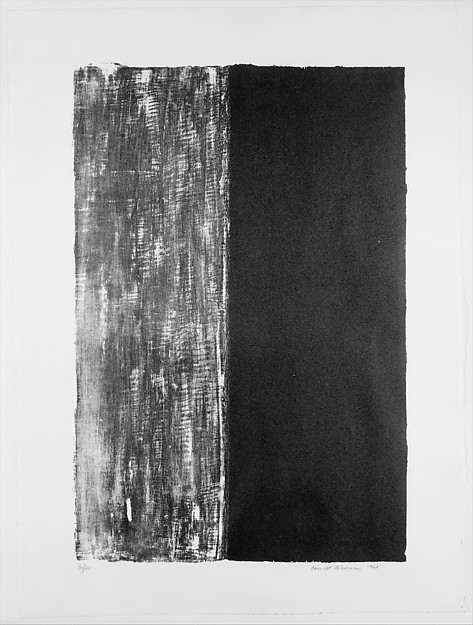
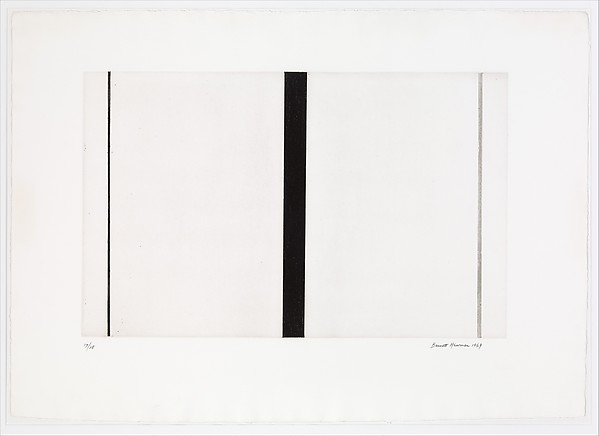
- Canto II, from 18 Cantos (1964). Canto II, from 18 Cantos, by Barnett Newman, is a 1964 lithograph in The Metropolitan Museum of Art. 3 cm). This work is part of a series titled 18 Cantos. The collection recorded the object in 1964. The title suggests a sequential or thematic relationship to other works in the series. The medium of lithography allows for multiple impressions, indicating a potential for wider distribution or a focused exploration of a particular visual idea across the series.
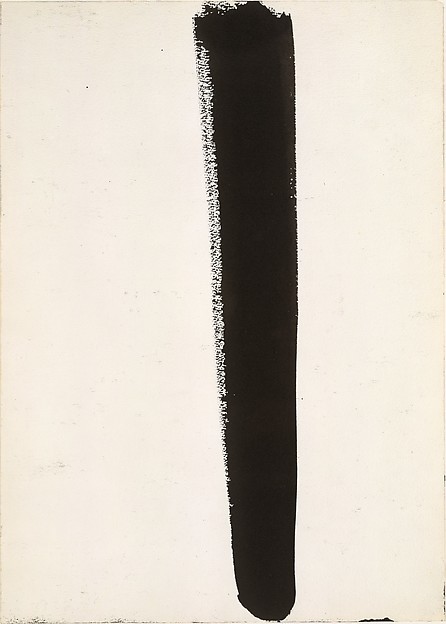
- Canto VI, from 18 Cantos (1964). Canto VI, from 18 Cantos, by Barnett Newman, is a 1964 lithograph held by The Metropolitan Museum of Art. 6 cm). The collection recorded this work in 1964. As part of the 18 Cantos series, its title indicates its place within a larger artistic statement. The consistent medium and year across the series suggest a concentrated period of artistic production and a deliberate exploration of form or concept through printmaking.
- Concord (1949). Concord, by Barnett Newman, from 1949, is an oil and masking tape on canvas in The Metropolitan Museum of Art. The work measures 89 3/4 × 53 5/8 in. 2 cm). The collection records its date as 1949. This painting, created with both oil and masking tape, presents a significant scale, suggesting an immersive experience for the viewer. The use of masking tape as a medium alongside oil indicates an experimental approach to surface and line. Its dimensions emphasize a vertical orientation, which can influence how a viewer perceives its composition and presence within a space.
- Shimmer Bright (1968). Shimmer Bright, by Barnett Newman, from 1968, is an oil on canvas in The Metropolitan Museum of Art. The work measures 72 × 84 1/4 in. 9 × 214 cm). The collection records its date as 1968. This painting, executed solely in oil on canvas, is notable for its substantial size. The dimensions indicate a horizontal emphasis, which can create a broad visual field for the viewer. Its creation date in 1968 places it later in the artist's career, suggesting a developed approach to his chosen medium and scale. The title itself, without further information, offers a hint towards its visual effect.
- The Song of Orpheus (1944). The Song of Orpheus, by Barnett Newman, from 1944, is an oil pastel on paper in The Metropolitan Museum of Art. The work measures 19 7/8 × 14 7/8 in. 8 cm). The collection records its date as 1944–45. This piece, rendered in oil pastel on paper, is considerably smaller than Newman's canvas works, indicating a more intimate scale. Its subject is abstraction, which aligns with the artist's known focus. The medium of oil pastel suggests a different textural quality compared to oil paint. The slightly extended date range for its recording might point to the period of its acquisition or cataloging.
- Untitled 2, 1949 (1949). Untitled 2, 1949, by Barnett Newman, is a leather work in The Metropolitan Museum of Art. The collection records this object as having entered the collection in 1952. The work, created in 1949, is made of leather. The title indicates it is the second in a series from that year. Without further information, the specific subjects or visual content of this untitled work remain open to interpretation. Its material suggests a departure from traditional painting or sculpture, inviting consideration of its texture and form. The gap between its creation and its recording date in the collection might suggest a period of private ownership or exhibition before its acquisition.
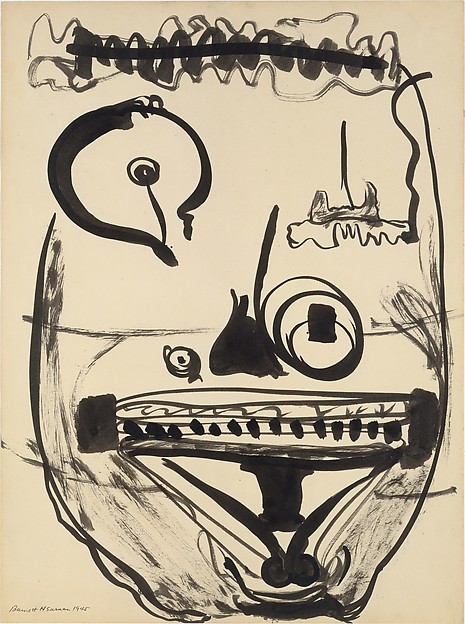
- Untitled (1945). Untitled, 1945, by Barnett Newman, is an oil pastel on paper in The Metropolitan Museum of Art. 3 cm). The collection records this object as having entered the collection in 1945. The work, created in 1945, is identified as an abstraction. The use of oil pastel on paper suggests a direct, perhaps spontaneous, approach to its creation, allowing for rich color and texture. Its relatively modest size might indicate a study or a more intimate work. As an abstraction, it does not represent specific objects or narratives, but rather explores visual forms and relationships.