15 October 1836 – 8 August 1902 · Nantes
James Tissot
Work
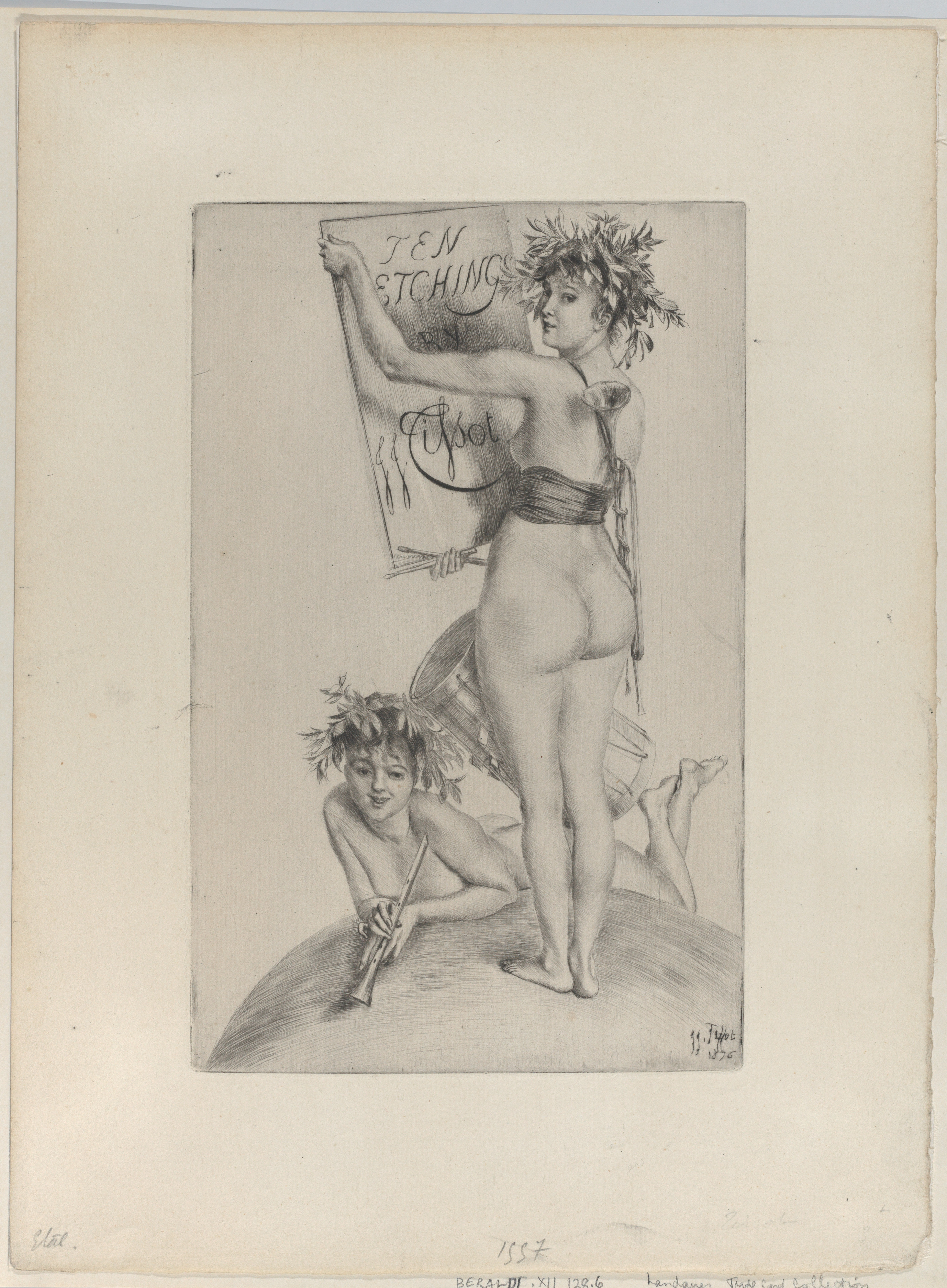
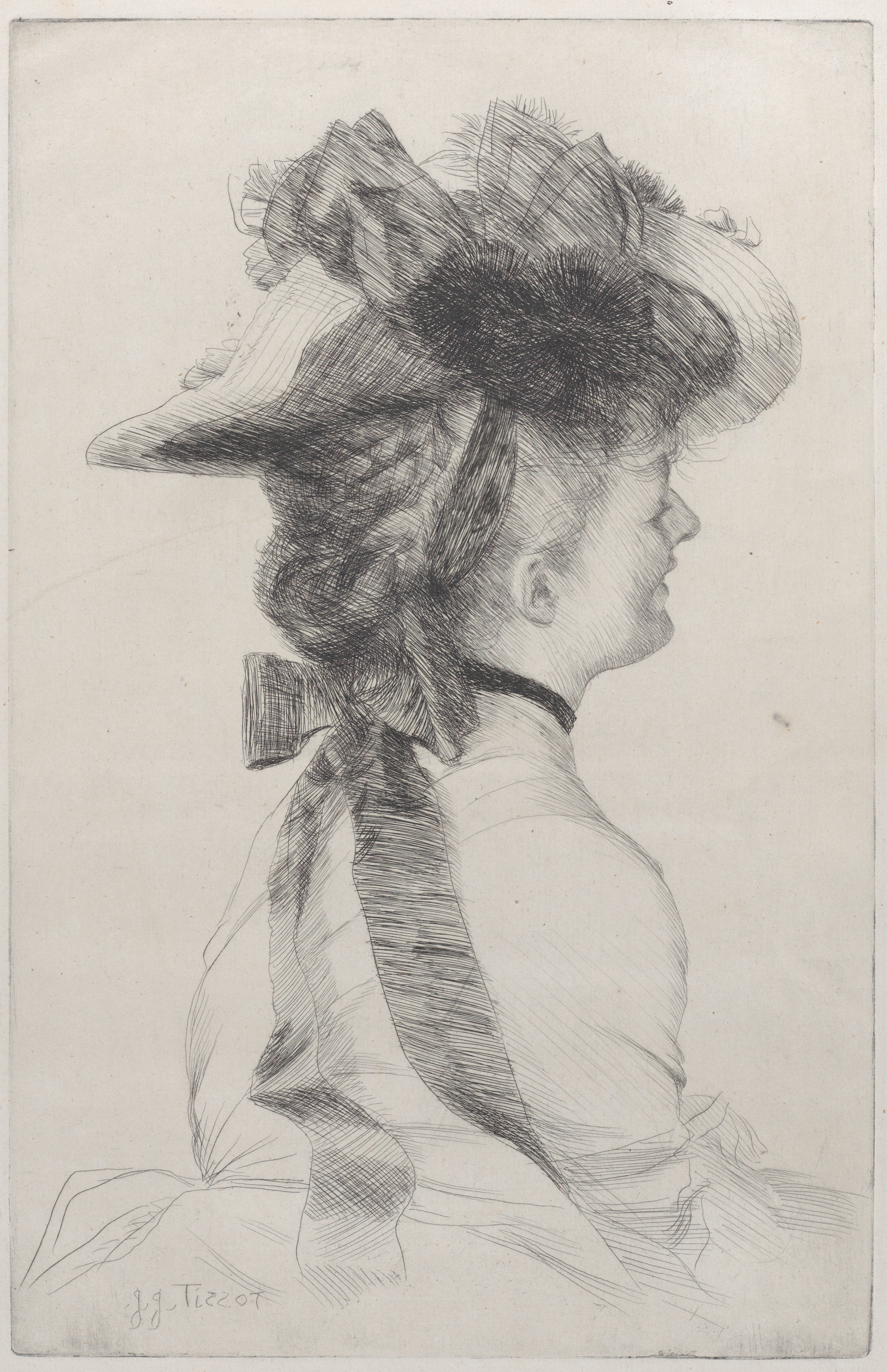
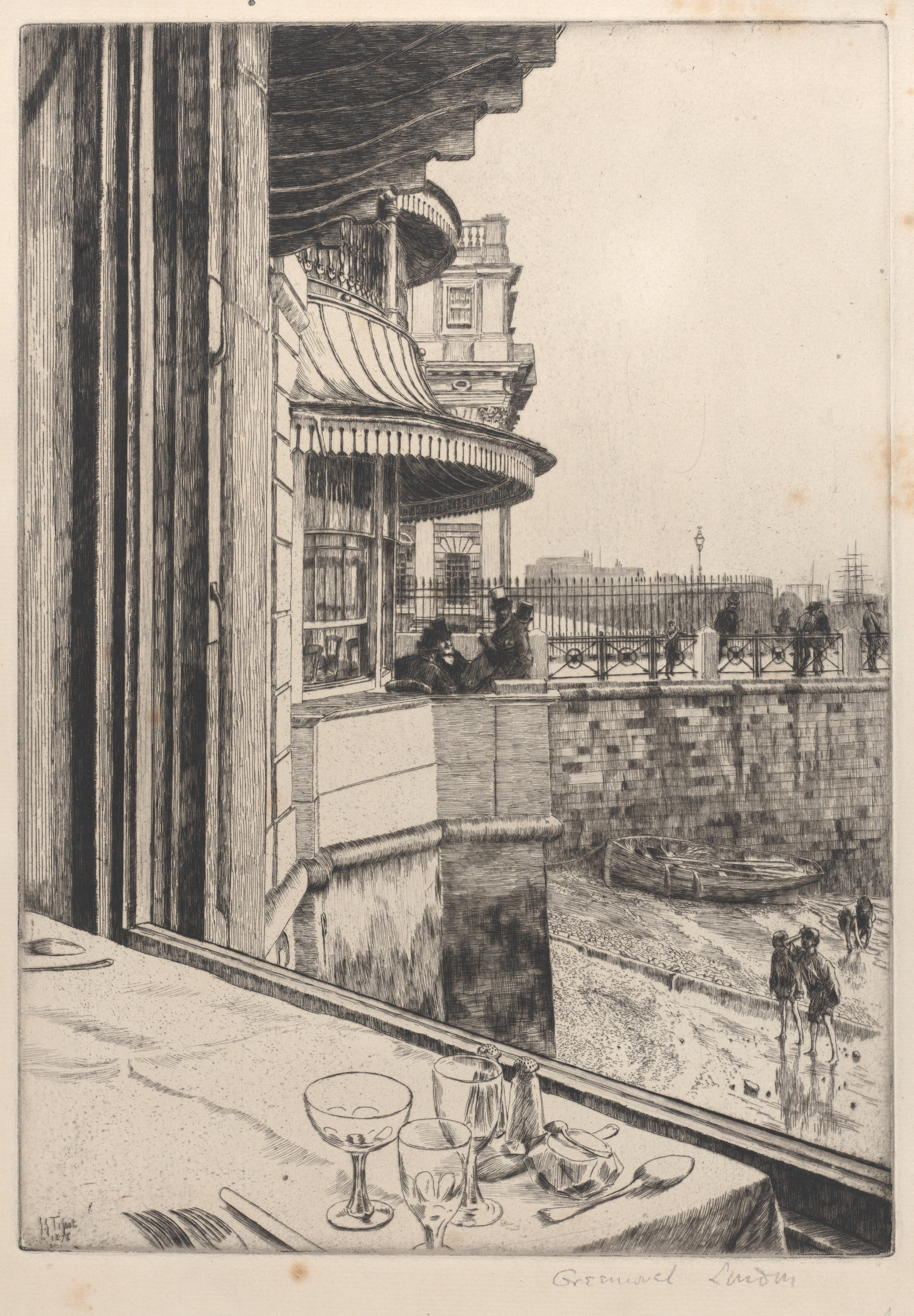
James Tissot's work includes drawings and prints. "Study of a young man bending forward to kiss a hand, for the painting 'The Departure of the Prodigal Son'" is a drawing made with graphite, heightened with white, on pink paper. Another drawing, "The Departure of the Prodigal Son," uses point of brush and brown ink, brush and brown wash, over graphite on the recto, and graphite on the verso. His prints include "The Parable of the Prodigal Son: Frontispiece," an etching in brown ink on wove paper, and "The Parable of the Prodigal Son: The Departure No. 1," an etching on laid paper. These works are held in The Metropolitan Museum of Art.
Biography
James Tissot was born in Nantes, France, on October 15, 1836. He was a French citizen who spoke both French and English. He studied at the Lycée Saint-François-Xavier de Vannes and the Beaux-Arts de Paris. Tissot worked in Paris, London, and Ramsgate during his career. His influences included Lucas Cranach the Elder, Giovanni Bellini, Vittore Carpaccio, and Hans Holbein the Younger. He created several notable works, including "Le Cercle de la rue Royale" in 1868, "October" in 1877, "The Parable of the Prodigal Son: The Departure No. 1" and "The Parable of the Prodigal Son: Frontispiece" in 1882, "La Fortune" also in 1882, "The Shop Girl" in 1883, and "What Our Lord Saw from the Cross" in 1890. He died on August 8, 1902, in Chenecey-Buillon.
Works