6 October 1887 – 27 August 1965 · La Chaux-de-Fonds
Le Corbusier
Work
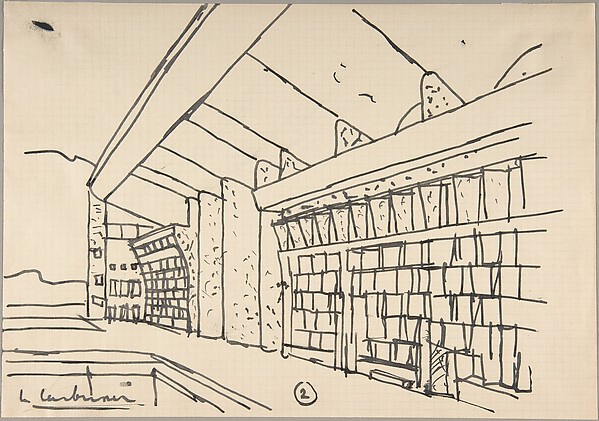
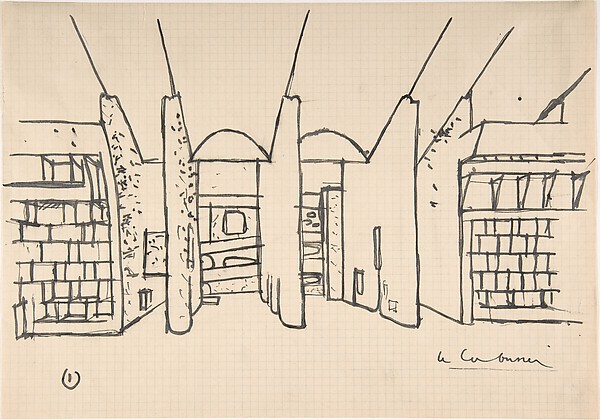
Le Corbusier's architectural work includes notable structures such as Notre Dame du Haut, Villa Savoye, and the Unité d'habitation. He also designed the Chandigarh Capitol Complex, which includes the High Court. The High Court, also known as La Haut Cour de Justice, in Chandigarh, India, was created in 1951. There are two distinct views of this building: one shows the façade at a raking angle, and another is a general view of the High Court. Other significant projects include the Tsentrosoyuz building, Maison Blanche, Villa Schwob, Villa La Roche, and Le Lac villa. He also created the Pavillon de l'Esprit Nouveau.
Biography
Le Corbusier was born Charles-Édouard Jeanneret in La Chaux-de-Fonds on October 6, 1887. His father was Georges-Édouard Jeanneret. He studied at the École d'art de La Chaux-de-Fonds. He was a Swiss and French citizen, and he spoke French. He worked in Paris as an architect, painter, writer, urban planner, photographer, draftsperson, textile artist, and visual artist. His work was influenced by Auguste Perret. He was a proponent of modern architecture and brutalist architecture, as well as purism. Le Corbusier died on August 27, 1965, in Roquebrune-Cap-Martin, from a myocardial infarction, which was a natural cause of death.
Works