21 November 1898 – 15 August 1967 · Lessines
René Magritte
Work
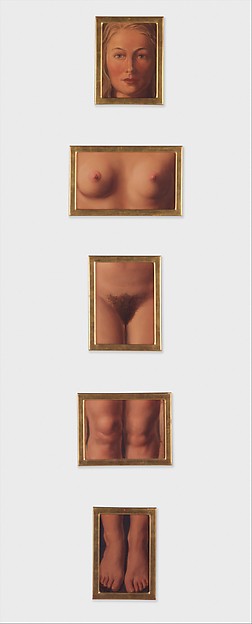
René Magritte worked as a painter, illustrator, draftsperson, photographer, printmaker, filmmaker, sculptor, and architectural drafter. His works include animal art, figure, landscape painting, nude, portrait, cityscape, still life, and interior view genres. Among his paintings are "The Eternally Obvious" from 1948 and another "The Eternally Obvious" from 1932. He also painted "The Banquet" in 1958, "On the Threshold of Liberty" (1937), "Dieu le huitieme jour" (1937), "Homesickness" (1964), and "The Tune and Also the Words." Other works include "Les valeurs personnelles (Personal Values)" (1952), "Edward James in front of 'On the Threshold of Liberty'" (1937), "The Eye," "La Mort des Fantômes" (1928), "La durée poignardée (Time Transfixed)" (1938), and "Night in Pisa (La nuit de Pise)" (1958).
Biography
René Magritte was born on November 21, 1898, in Lessines, Belgium. He was a Belgian citizen and spoke French and Hungarian. He was part of the Walloon people group. Magritte trained at the Royal Academy of Fine Arts of Brussels. He worked in Brussels, Carcassonne, Paris, and London, and resided at the René Magritte House. His work was influenced by artists such as Hieronymus Bosch, Giorgio de Chirico, Max Ernst, and André Breton. His notable works include "The Treachery of Images" (1929), "The Mysteries of the Horizon" (1955), "Golconda" (1953), "The lovers" (1930), "The Empire of Lights" (1939), "The Son of Man" (1964), "The Human Condition" (1933), "Not to be Reproduced" (1937), "The Menaced Assassin" (1927), "The Meaning of Night" (1927), "The Empty Mask" (1928), and "The Portrait" (1935). René Magritte died on August 15, 1967, from pancreatic cancer.
Works
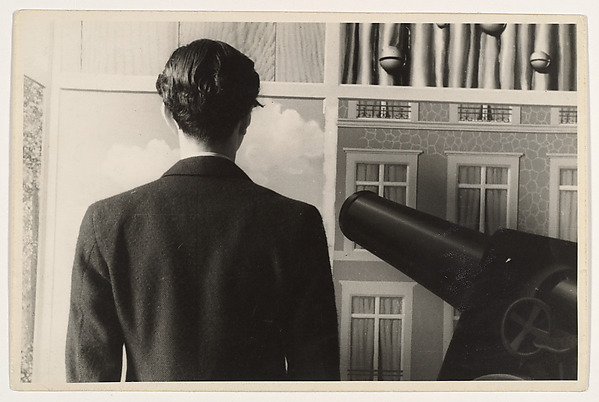
R Night in Pisa (La nuit de Pise)